Probably the most important story I’ve worked on
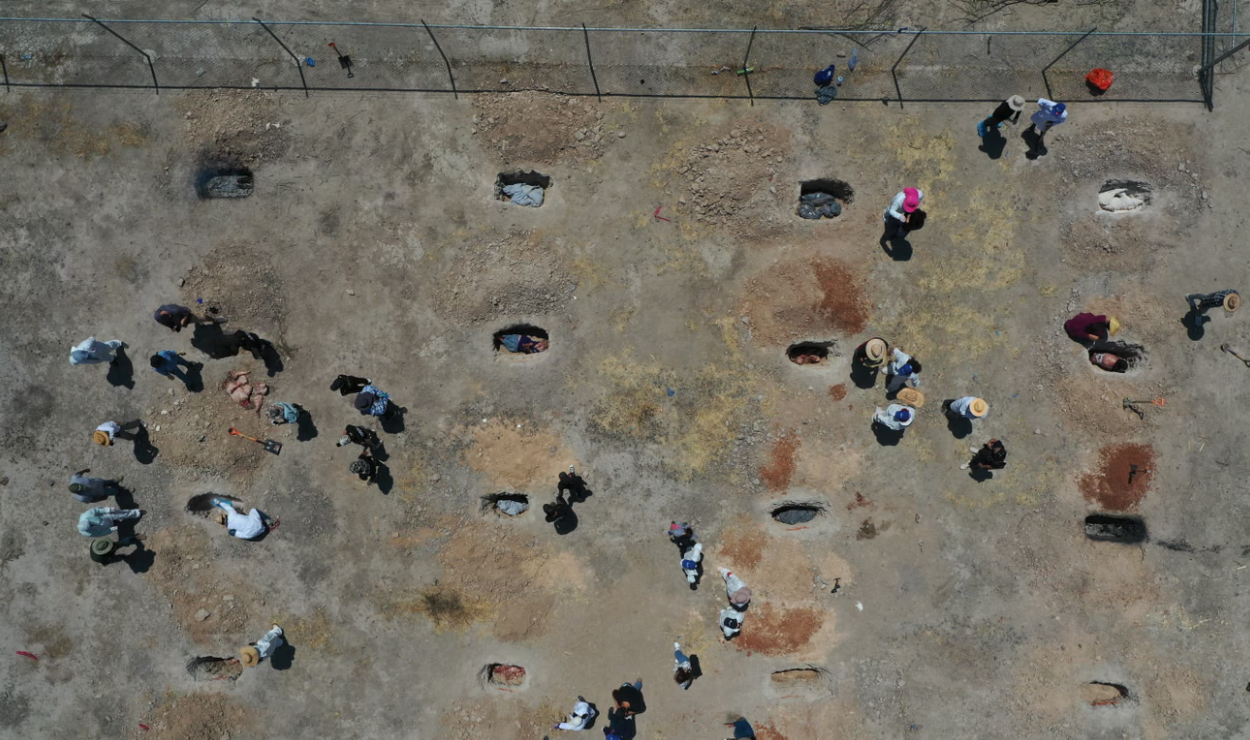
A view of different test ‘graves’ at an experimental burial plot in Jalisco state. Photograph: Jalisco Search Commission
After almost a year working on a story about the innovations being tested to try and find some of the thousands of people who have forcibly disappeared in Mexico, the piece was finally published last week.
After six months of email conversations, WhatsApp messages and calls, in June I visited the western state of Jalisco, which was then the state with the highest number of missing people in Mexico (Mexico City has recently slightly taken). Most are missing because of the cartel - many are forcibly recruited into working for them, some go missing when they try to leave. Many are never to be seen alive again.
As well as the pig burial sites, Jalisco Search Commission is experimenting with geophysical technology such as electrical resistivity tomography, which can create images of the soil below the surface by measuring variations in voltage, and multispectral cameras on drones, which can detect substances in the soil that often indicate the presence of decomposing remains, such as nitrogen and potassium.
The story is grim but the innovations being used are helping find more bodies and bring some kind of closure to families. I'm thrilled it's been given the platform it deserves (and was the most-read story on the Guardian Global Development section for several days).
I was going to focus this blog on a behind-the-scenes look at what goes into a story of this nature but then I realised I kind of did that in June. Here it is.
What I can add is that I took a huge leap of faith to work on this story, which was only commissioned in September after a number of weeks of discussions with a couple of different editors. Thankfully one commissioned it and I had to squeeze all those lengthy interviews and the site visits into 1000 words. Editing is always tough but even more so when it can easily be expanded to around 4,000 words and you have hours of interviews and research to compress. After filing, another editor on the Global Development desk dropped me a line last week to say it suited their section more. He changed the intro back to how I had originally started writing it, and after some questions and me checking the copy, the following day it was published.
I am immensely proud of working on this story. The Jalisco Search Commission emailed me afterwards to say: “Thank you Susie for the article, you captured exceptionally well the essence of the research project and it will help us a great deal to make this wound our country, but specially our children and teenagers are suffering, visible to the decision makers.”
So, hopefully it matters. And it’s one of the the reasons I am working abroad again in January.